
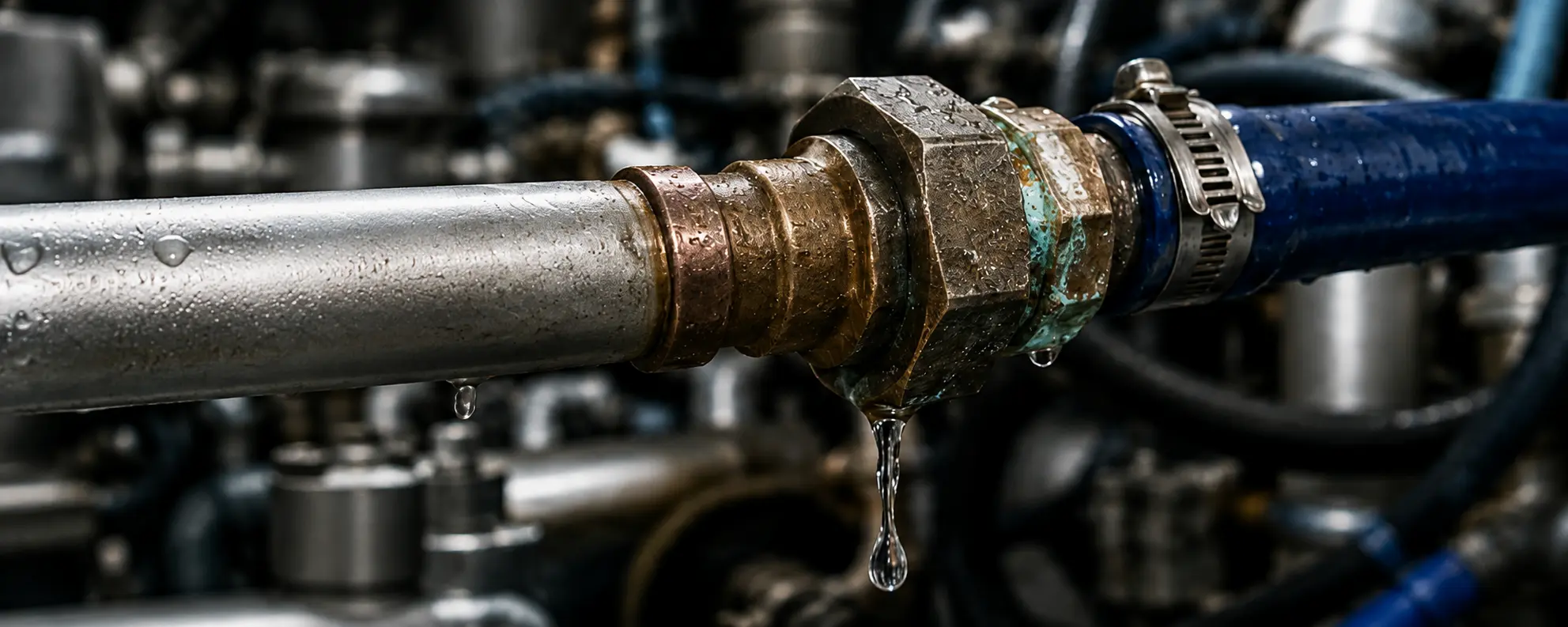
Why do the plumbing connections on a yacht loosen over time?
Vibrations, salinity and normal wear
A yacht's plumbing systems operate in a constantly moving environment, exposed to vibrations, humidity, salinity, and pressure changes. Over time, fittings, gaskets, clamps, fasteners, and connections can deteriorate long before an obvious leak appears.
The plumbing on a yacht does not operate in a static environment.
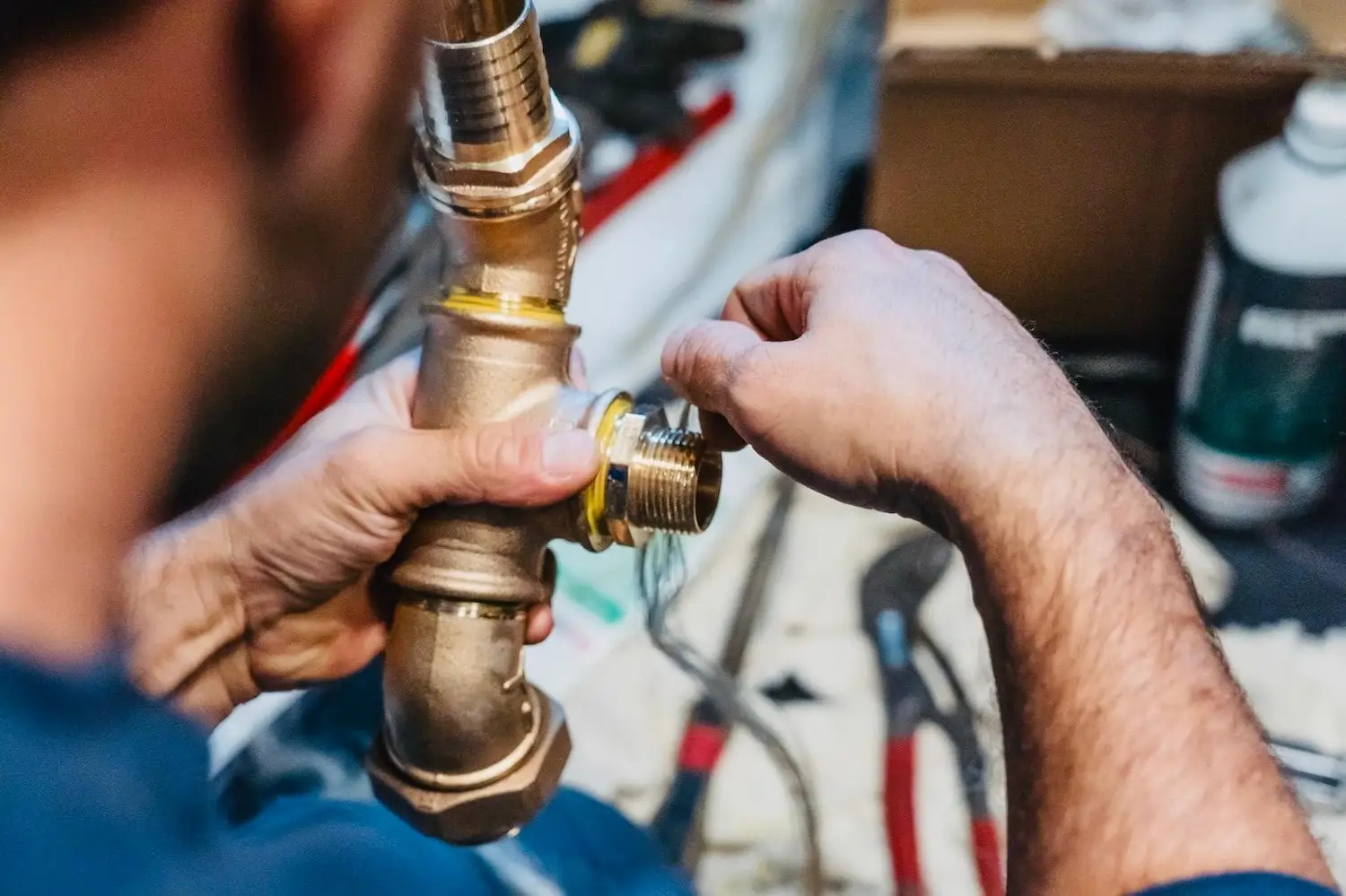
Every time the yacht sails, the engines run, the pumps start, or equipment is put into service, the installation is exposed to movement, vibrations, and pressure variations.
Over time, these forces can affect fittings, supports, clamps, gaskets, valves, and connections distributed throughout the system.
The problem doesn't always start with an obvious leak. It might first appear as a small damp patch in a technical area, a connection that needs adjusting, an occasional drop in pressure, or a pump that starts running more frequently than usual.

Detecting them early can prevent a minor incident from turning into a leak, breakdown, or operational problem just before a departure, charter, or the owner's arrival.
Why are a yacht's plumbing systems under constant stress?
A plumbing installation inside a yacht operates under very different conditions than a conventional installation on land.
Movement, machinery, pressure changes and the marine environment act simultaneously on the system throughout its useful life.
Yacht movement
Navigation, hull movement, and structural bending transmit small mechanical loads to the installations.
Machinery vibration
Motors, generators, pumps, and compressors transmit repeated vibrations to pipes, fittings, and supports.
Pressure cycles
The pumps start and stop repeatedly as the demand for water on board changes.
Salinity and humidity
Humidity, environmental salinity, and direct exposure to seawater can accelerate the deterioration of sensitive components.

The routing of lines, fittings, supports, pumps, valves, pressure, temperature, and materials must be analyzed as part of the same technical system.
The movement of the yacht subjects the installation to constant loads

A yacht is never completely static. During navigation, the hull moves, flexes, and continuously responds to the state of the sea.
These movements are transmitted to the technical systems inside. The pipes, fittings, supports, valves, and hoses experience small loads that change direction and intensity as the vessel moves.
A single navigation session doesn't usually cause a breakdown. The problem arises when these stresses are repeated for hundreds or thousands of operating hours.
How does navigation affect the plumbing system?

A properly designed installation must allow for some movement without transmitting excessive loads to the connections. The location of supports, the combination of rigid and flexible lines, and the pipe routing are fundamental factors in absorbing the stresses generated during navigation.
Vibration is one of the main causes of mechanical stress
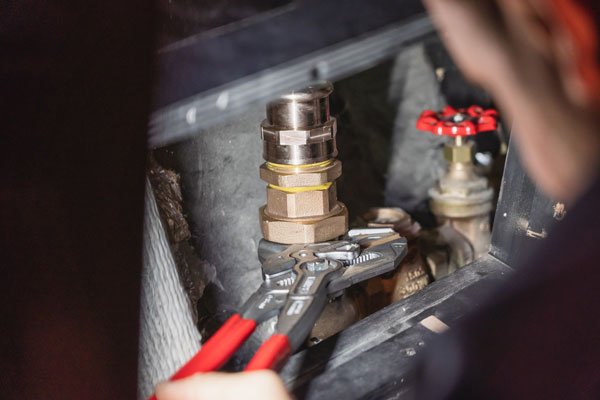
Vibration is unavoidable on a yacht. Engines, generators, pumps, compressors, and other equipment transmit small movements through the vessel's structure.
Each individual movement may seem insignificant, but thousands of hours of repeated vibration end up putting stress on connections, fixings, and plumbing components.

Areas that should be checked with special attention
Not all problems mean a threaded fitting has come loose. Repeated movement can also affect gaskets, seals, hoses, clamps, or proper pipe alignment.
Pressure cycles subject the connections to repeated loads
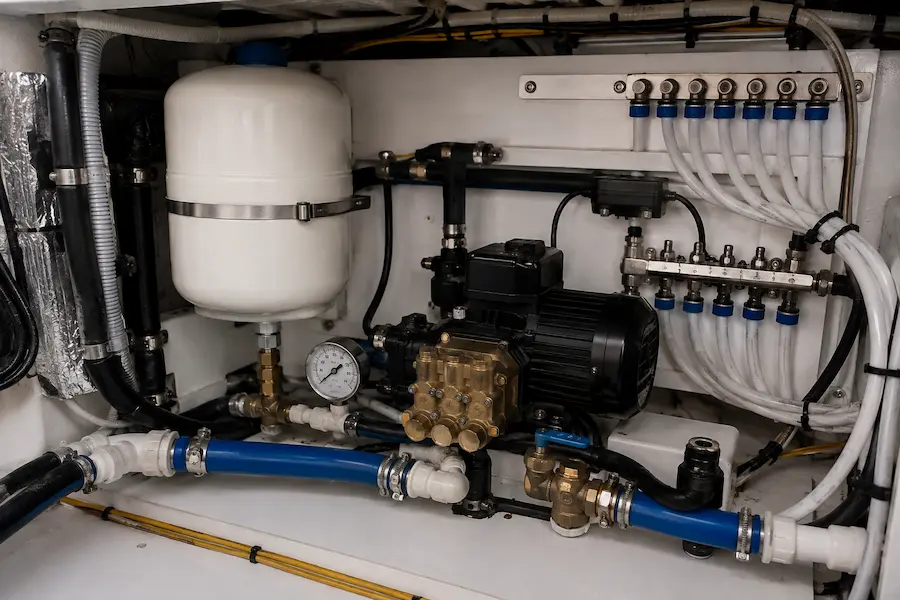
A yacht's pressurized water system constantly changes state each time a consumption point is opened or closed.
When a shower, sink, or any other water outlet is used, the system pressure drops. The pump activates to restore that pressure and stops when the system reaches the expected level again.
This process can be repeated hundreds or thousands of times during the season, subjecting joints, fittings, valves, hoses, and connections to small successive loads.
Components affected by pressure changes
A properly balanced system should not force the pump to start excessively frequently. A poorly adjusted expansion vessel, a small leak, or a loss of pressure can increase the number of cycles and accelerate wear on components and connections.
Salinity and humidity accelerate the deterioration of connections

The marine environment continuously exposes a yacht's technical systems to high humidity, ambient salinity and, in certain circuits, direct contact with seawater.
Salt does not directly loosen a connection. However, it can promote corrosion and deterioration of metal components, clamps, sealing surfaces, fittings, and joints.
When this process is combined with vibrations, movement, and pressure cycles, a connection that was initially in good condition can lose reliability over time.
Signs to check in a marine environment
The presence of corrosion around a connection should not be treated merely as an aesthetic problem. It can be a sign of persistent moisture, minimal water loss, material incompatibility, or progressive deterioration of the sealing point.
The problem may be bigger than the drop of water we see
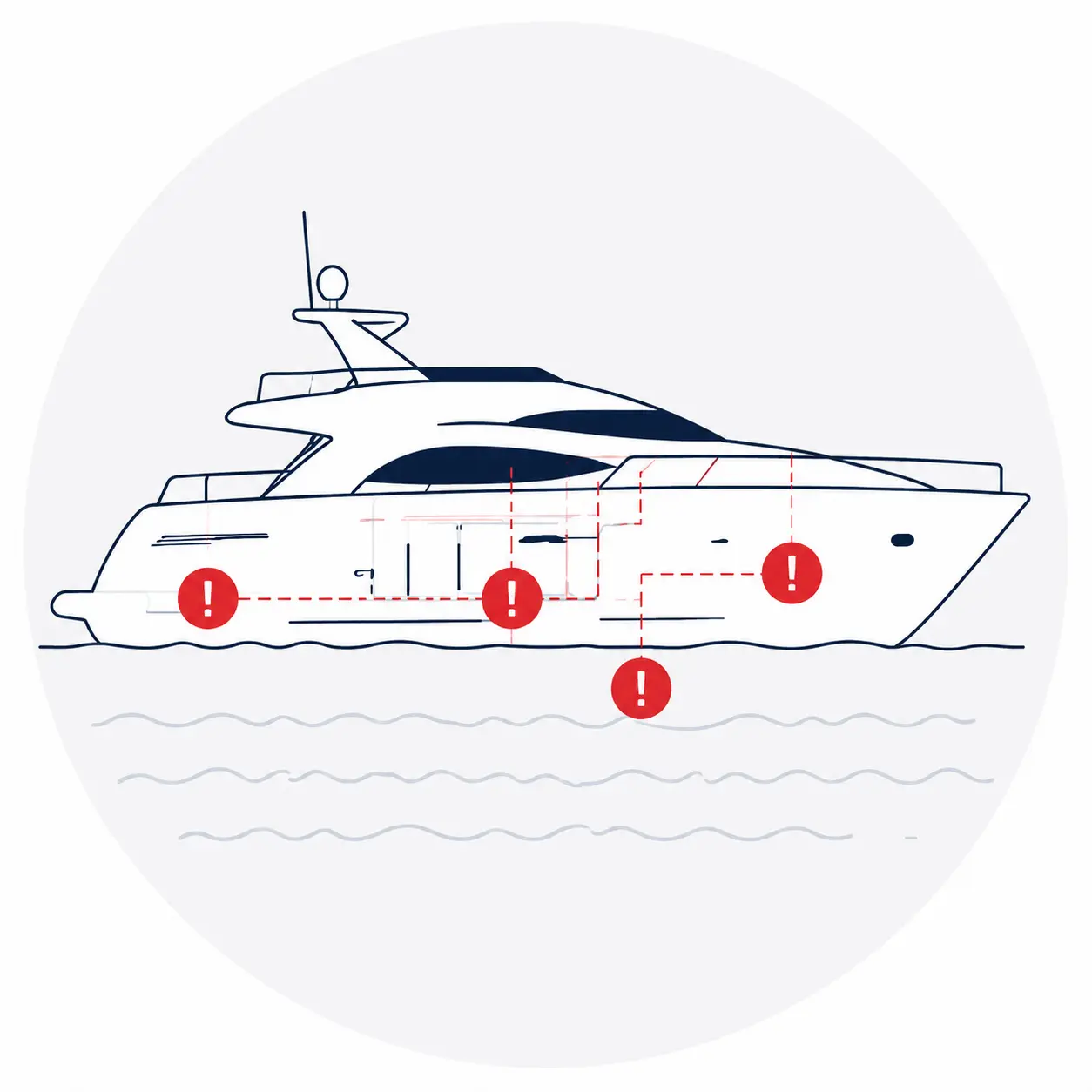
Many of a yacht's plumbing lines run behind furniture, under floors, or through technical compartments with limited access.
A small leak can remain hidden for quite some time while the water affects other materials and equipment.
What can be affected by a hidden leak?
Isolation
Wood and furniture

Electrical equipment
Pumps

Metal structures
The cost of repairing the original connection can be relatively low compared to the secondary damage caused by a leak that has gone undetected.

avoid damage after
Detecting a small leak early helps protect the yacht's structure, equipment, and finishes, reducing complex repairs and downtime.
When is it advisable to check the plumbing connections of a yacht?

There is no single interval that applies to all vessels. The age of the yacht, its use, the type of installation, the maintenance history, and the working conditions all influence the frequency of servicing.
To detect compromised connections, joints, or components before the period of greatest use.
It reduces the risk of technical issues during guest stays.
It allows you to check the systems that directly affect comfort and operation.
It's a good time to check lines and connections when there is better access to technical areas.
When the same problem returns, it's best to look for the real cause and not just repeat a temporary fix.
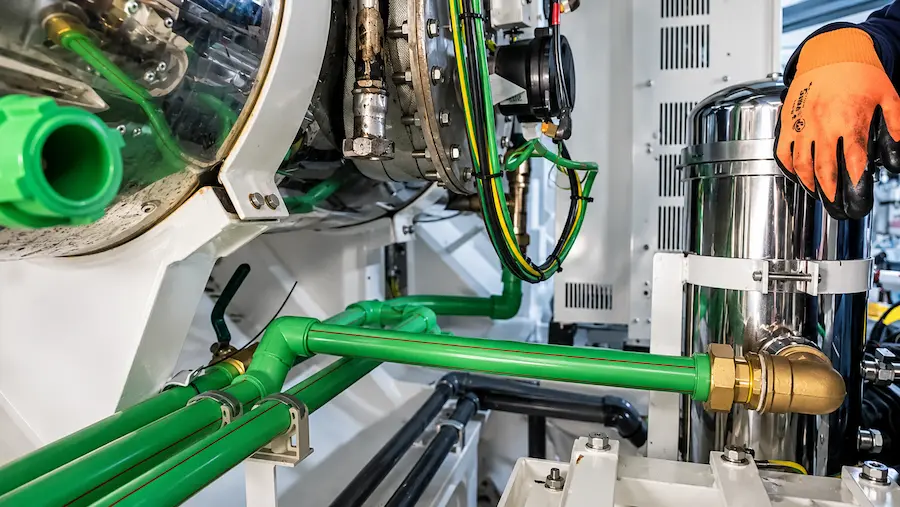
What we check during a plumbing system inspection
The goal is not simply to find which piece can be tightened.
We review how the affected connection interacts with the rest of the system to determine if it is an isolated incident or a problem related to pressure, vibration, fastening, corrosion, or wear.
Technical analysis. Precise diagnosis. Long-lasting solutions for your yacht.