
Is it safe to drink the water from a yacht's water tank?
Discover what factors affect the quality of water stored on board and how a well-installed filtration system can improve the taste, reliability, and comfort of drinking water on your yacht.
Drinking water on board
Technical filtering for yachts
Service at major ports
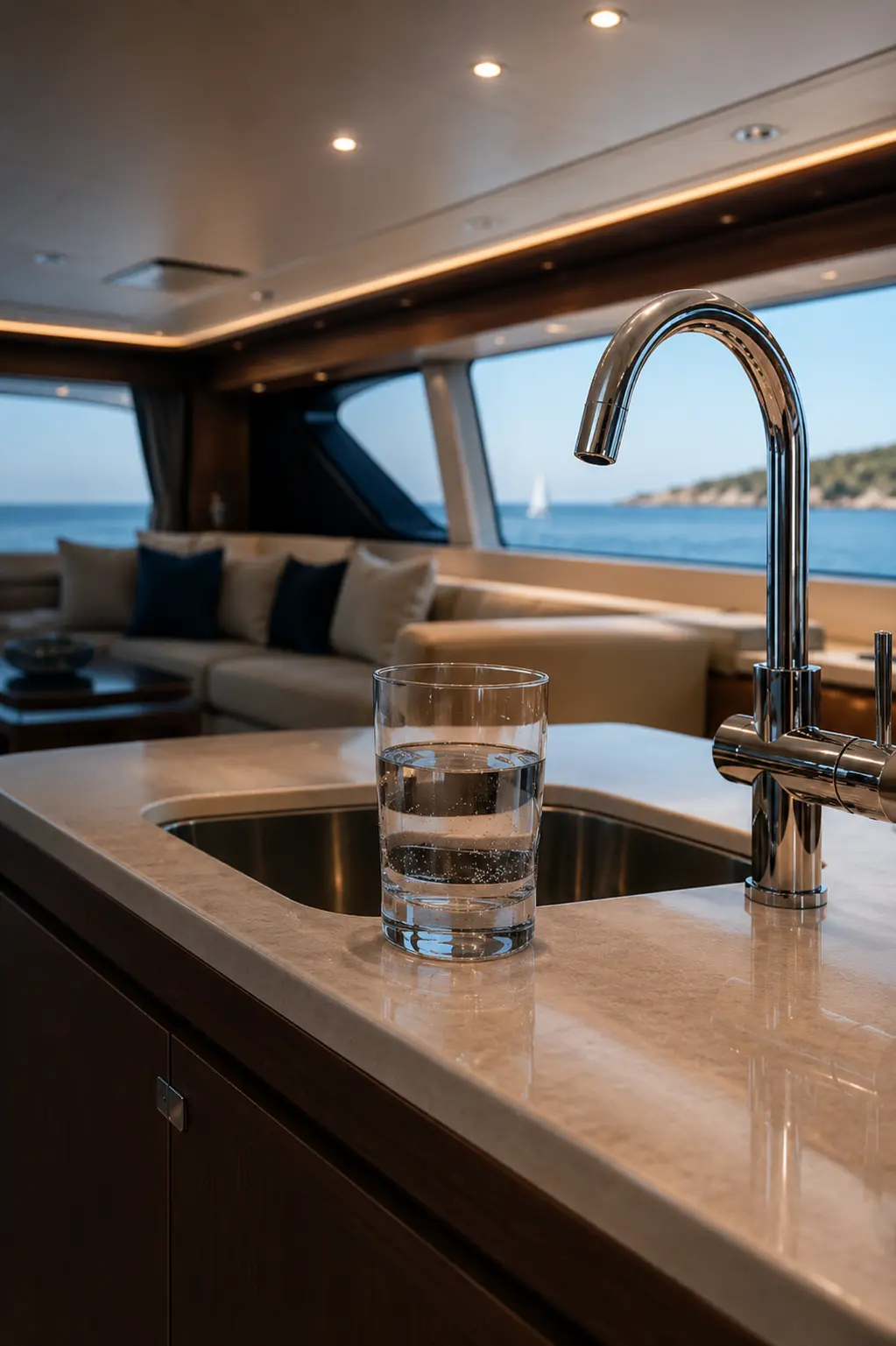
So, is it safe to drink the water from the tank?
The answer depends on the actual state of the system. On a yacht, potable water consumption is not defined solely by the tank: pipes, filters, connections, points of use, maintenance, and storage time also play a role.
It should not be assumed without reviewing the entire system.
A full tank alone does not guarantee that the water is pleasant or safe to drink. Before relying on it, it's advisable to assess whether the freshwater system is properly maintained, whether adequate filters are in place, and whether the drinking points are suitable for daily use by owners, guests, or crew.
Yes, when the system is under control
Drinking water from the tank may be viable when the system is checked, the consumption points are protected, and there is a suitable filtration solution.
- Freshwater tank in good condition.
- Filters properly installed and maintained.
- Pipes and connections checked.
- Defined point of consumption for drinking or cooking.
It is not recommended if there are doubts.
If any signs of mistrust appear, it is prudent not to rely on the water from the tank for direct consumption until the system has been checked.
- Strange smell, taste, or visible sediment.
- Yacht inactive for weeks or months.
- Old or maintenance-free filters, of course.
- Doubts about the condition of the tank or pipes.
The best solution is to filter at key points
On many yachts, it's not necessary to overhaul the entire system. The most practical solution is usually to install technical filtration at the points where water is actually consumed.
- Main kitchen or sink.
- Pantry or service area.
- Specific area for guests or crew.
- System adapted to the available space and pressure.

Before installing any filter, it is advisable to check the freshwater system and define which point of consumption really needs a technical solution.
Which system is best to install for drinking water on board?
The right solution depends on the yacht's intended use, the available space, and the desired level of comfort. In some cases, simply improving the galley filtration is enough. In others, an integrated solution such as Quooker It can provide more value because it combines filtration, convenience, design and bottle reduction in one point.
The key is not just choosing a piece of equipment, but installing it correctly within the existing freshwater system.
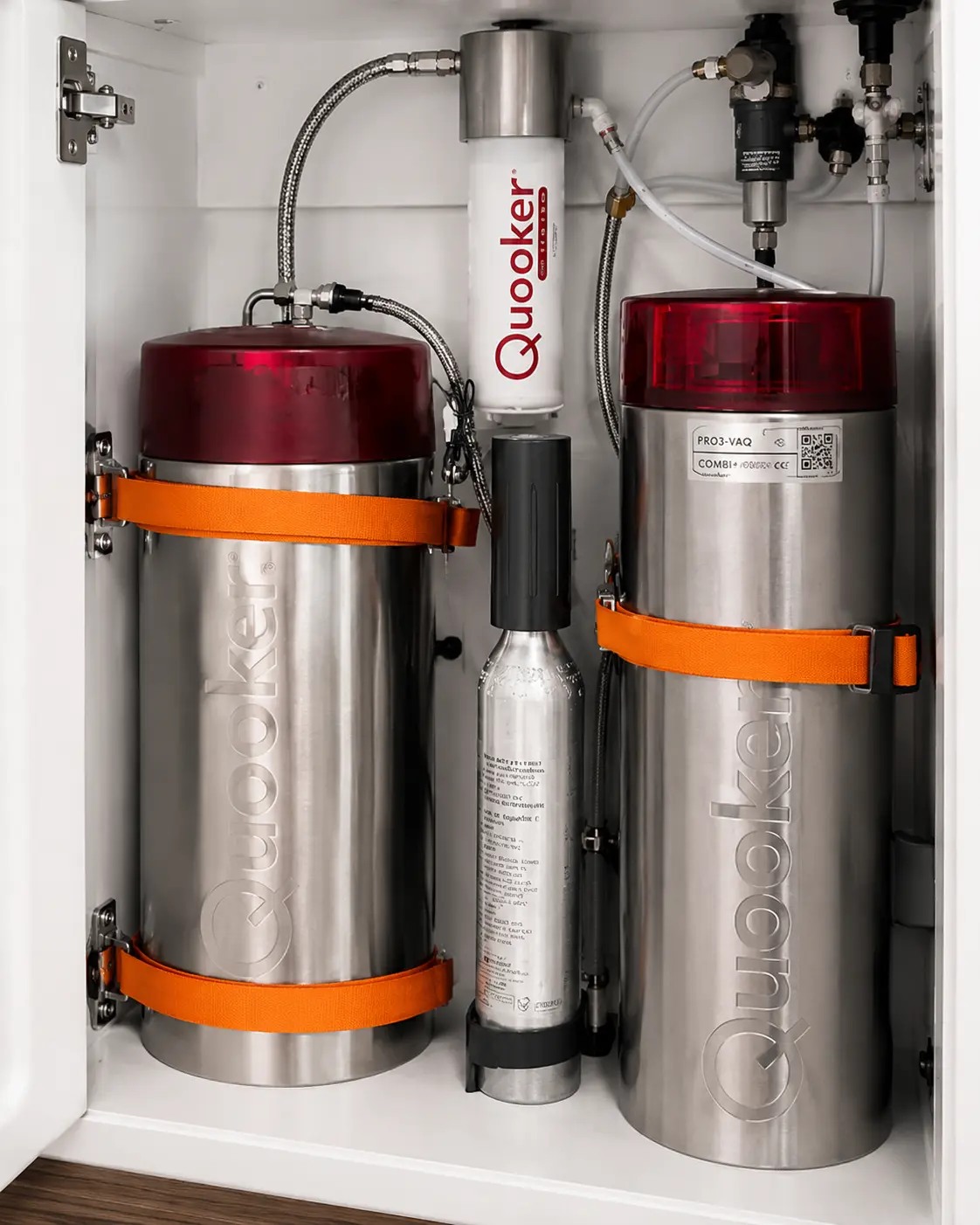
Filtration and purification adapted to the yacht's freshwater circuit.
Filters, UV, osmosis and integrated solutions
Before choosing a system, it is advisable to review how the freshwater circuit is constructed: available pressure, technical space, accessibility for maintenance, type of consumption and exact point where filtered water is desired.
A well-designed system can combine micron filters, activated carbon, UV treatment, reverse osmosis or integrated solutions, always adapted to the actual conditions of the vessel.
Quooker as an integrated solution for filtered water on board
A conventional filter can improve water quality at a specific point, but it doesn't always provide the complete experience. In yacht kitchens, where practicality, aesthetics, and premium service are paramount, an integrated solution allows for the centralization of several functions at the same point of use.
Quooker is especially interesting when the goal is not just to filter water, but to reduce bottles, improve daily service and have a more convenient solution for kitchen, drinks, owners, guests and crew.
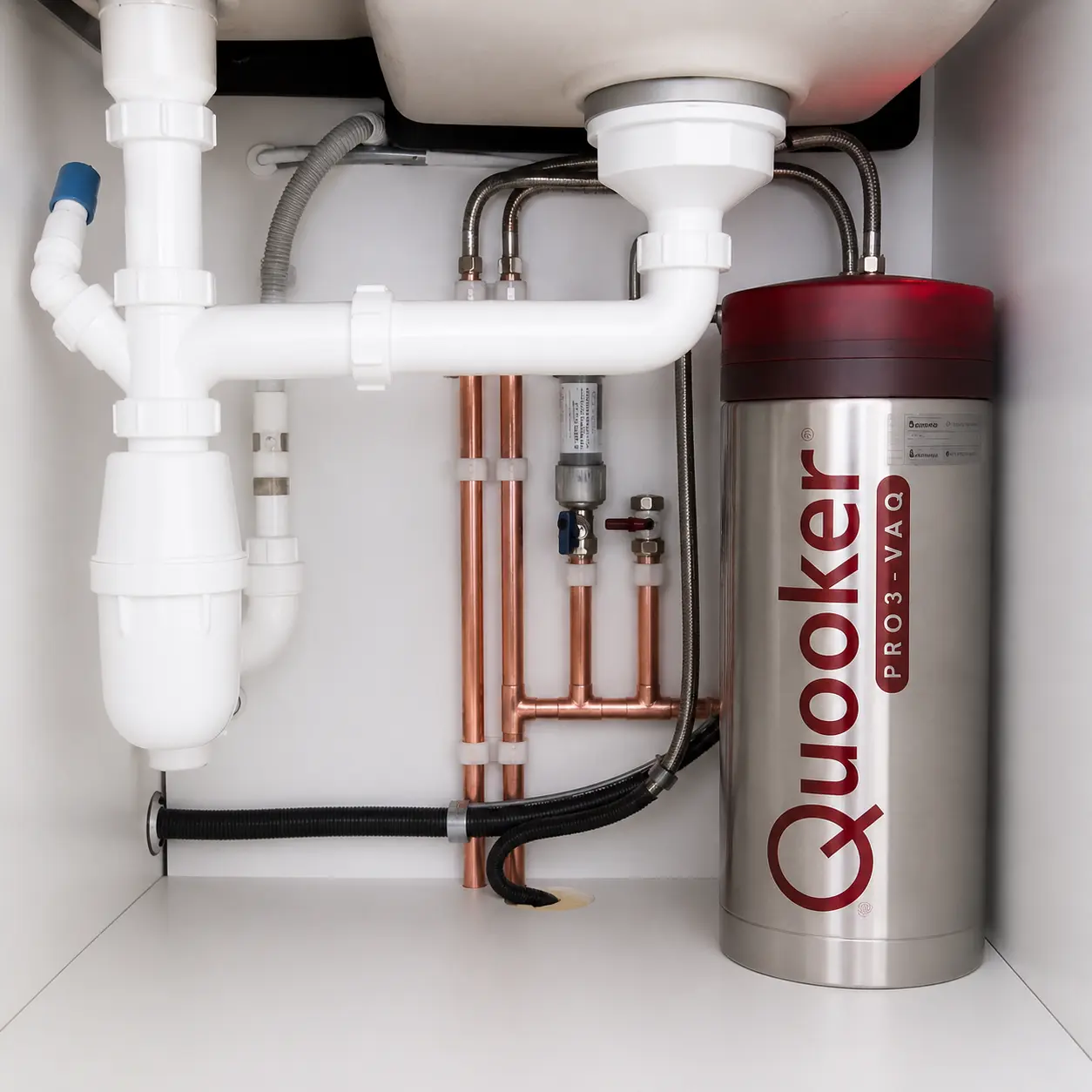
Technical comparison: conventional filter, osmosis/UV or Quooker
There is no single solution that fits all yachts. The choice must be made according to available space, pressure, maintenance, frequency of use, and the expected level of service on board.
Before choosing Quooker, osmosis, UV or conventional filters, it is advisable to check space, pressure, maintenance and actual point of consumption.